address:
Service points are available in Shenzhen, Hong Kong, Japan, Boten, Kyrgyzstan, Russia, and the United States.
microsoft
zj2017122
Phone:
13902458366

address:
Service points are available in Shenzhen, Hong Kong, Japan, Boten, Kyrgyzstan, Russia, and the United States.
microsoft
zj2017122
Phone:
13902458366

For business inquiries or to obtain the latest industry quotes, please scan the QR code or add the WeChat ID below. We will provide you with one-on-one exclusive service.

| Your biggest concern. | My answer. | Why do you say that? | degree of reliability |
|---|---|---|---|
| Is a surrogate's baby American? | It has to be. 100%. - Definitely. | 14th Amendment to the U.S. Constitution (landed as an American) | ⭐⭐⭐⭐⭐ (Absolute Iron Law) |
| I am Chinese, can my child get a US citizenship? | Yes, it's none of your business. | Nationality is based on "where one is born", not on who one's parents are. | ⭐⭐⭐⭐⭐ |
| It's okay even if it didn't come out of my own stomach? | it's not important | The law doesn't care how you were conceived, only where you were born. | ⭐⭐⭐⭐⭐ |
| The surrogate mom is American. Whose baby is it? | It's on you. | The surrogate mom is just the "house", the child is yours. | ⭐⭐⭐⭐⭐ |
| Can I get a household registration when I return to my home country? | Most of them. | As long as you don't have a green card, the Chinese government recognizes this child. | ⭐⭐⭐⭐ (depends on the specific operation) |
Let's not beat around the bush. I know that's what's weak in your heart.
I'll put the conclusion here:Counting.
And not in the ambiguous "counting" sense, but in the ironclad, uncontested American citizenship sense.
In the United States, the logic for determining whether a person is an American or not is ridiculously simple and crude: three words:Birthplace.
As long as your baby makes his first cry on U.S. soil (whether it's in a plush maternity ward in L.A. or a rural hospital in Idaho), even if he's a surrogate, even if the sperm and eggs are bought, he's a constitutionally-protected citizen of the U.S. from that moment on, and Jesus couldn't change that even if he came.
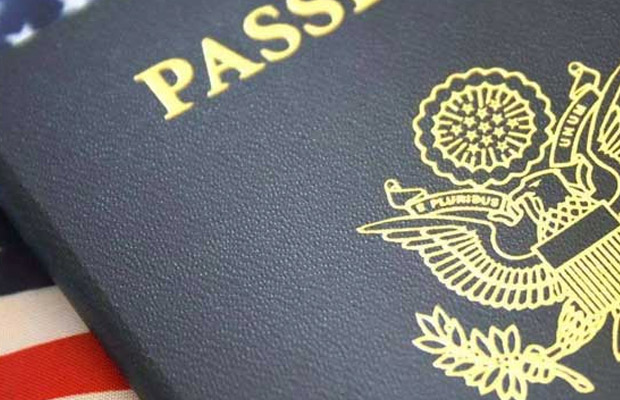
As long as one condition is met:The baby was taken out of the maternity ward in the US.
Here is where I need to correct a huge misconception that many parents have. Many people think, "Does it count because I went to a regular surrogacy agency?" Or "Does it count because I went through the IVF process?"
All wrong.
The U.S. government doesn't give a damn about how the child was conceived when they issue passports. They don't look at whether or not you did IVF, whether or not it was a surrogate, or even whether or not you are the biological parent of the child.
The law only looks at the facts:
As soon as that piece of paper arrives, the immigration and passport offices recognize it. So even if the child was born to a Mexican surrogate mom, as long as he was born in the United States, he was an American. That's still the rule in 2025.
Although I just said very full, but for the sake of rigor (after all, we are professionals), I have to mention that 0.01% special case, so that you do not go to the Internet to see a headline party was scared to sleep.

There are basically just two groups of people who were born in the US but are not Americans:
To put it bluntly, unless you are traveling to the United States to give birth to a child with a diplomat's credentials (and this kind of big shot usually doesn't dare to engage in surrogacy), for those of us who go to the United States to seek a child's ordinary family, the middle class, or the rich and powerful, all of these exceptions do not exist. Your baby, on landing, will be an American citizen, without any suspense.
After doing this business for a long time, I found that no matter how to explain, everyone's heart is still false. I summarized three of the most useful big truth, you write it down in your phone memo, and in the future, whoever questions you again, you will dump these three sentences on him:
"There's not a dime's worth of difference between a surrogate baby and a regular baby born in the U.S. when it comes to the matter of getting citizenship."
The passport officer only looks at the birth certificate. He won't ask, "Whose womb did this baby come out of?", nor will he ask you to show the surrogacy contract for inspection. In terms of nationality, surrogate babies have equal rights to those who fly there to give birth to their own babies.
"Nationality is based on place of birth, not on who conceived it."
This logic must be turned around. Many people feel that "if it's not theirs, it's not real". But in the eyes of American law, "territory" is greater than "blood". As long as the child was born on American soil, that's enough.
"The nationality issue is really the easiest, the hardest part is how to establish that you are a parent."
That's what I'd like to warn you about. You don't have to worry about the baby being American, you have to worry about "how to put your name on the parents' side of the birth certificate". This is the biggest difference between surrogacy and normal birth! It requires a court decision and a lawyer, which is the real skill (I'll teach you more about that later).
Many parents ask me, "Isn't this American law a little too 'dumb and white'? As long as you land on the ground you are an American, what do they want?"
There was even concern: "Could this be a temporary loophole, and the loophole will be closed just as we get there?"
It's normal to be concerned, but I'll tell you this: this is not a loophole, it's the foundation of the United States, the "law of the land" written in the Constitution.

It all started back in 1868. The United States had just finished fighting the Civil War, and in order to give the freed black slaves a legal identity, the United States passed the famous Fourteenth Amendment to the Constitution.
Even if you can't remember anything else, this one must ring a bell. It has a golden rule in the original text:
"All persons born or naturalized in the United States, and subject to the jurisdiction thereof, are citizens of the United States ...". ..."
(All persons born or naturalized in the United States and subject to its jurisdiction are citizens of the United States ......)
See what I mean? It doesn't mention skin color, it doesn't mention who the parents are, and it doesn't mention how you got pregnant. It only recognizes a red line:Born in the United States.
That's why I say it's an "iron law." It's not an executive order that some president can sign and change, it's the Constitution. You want to change the Constitution? It takes two-thirds of the House and Senate, and three-fourths of the states to ratify it - and that's harder than ever in American politics these days. So don't listen to the politicians on the news, as of 2025, this pillar is solid as a rock.
While I say it's ironclad, there's a phrase in there that's overlooked by a lot of agents:"Subject to the jurisdiction thereof".
What does that mean? It means that when this child is born, it must be subject to the laws of the United States.
The vast majority of people - whether you are traveling, studying, working, or even an illegal immigrant - are subject to the laws of the United States as long as they are in the United States, which is called "subject to its jurisdiction." This is called "subject to its jurisdiction.
So, as long as the surrogate mother gives birth on U.S. soil, the child is naturally subject to U.S. law.
Here's a little detail: some parents have asked, "Does it count if you give birth on a plane to the United States?"
Surrogacy home tell you: if unfortunately born in an airplane over the high seas, it is really a bit of a problem. But we do surrogacy, are stable in Los Angeles, Chicago, regular hospital birth, down-to-earth, so this "jurisdiction" is 100 percent can not escape.
Okay, here's the kicker. How is it that a law written more than a hundred years ago can regulate the "high-tech surrogacy" of today?
Because the law is about "universality".
In the eyes of American law, there is no difference between a baby born from a surrogate and a baby born from a drunken, unwanted pregnancy in Las Vegas. The law does not discriminate. It doesn't say, "Oh, you're inferior because you were matched in a test tube."
This is the logic of the common law system: as long as the law does not expressly prohibit or differentiate, the general rule automatically applies in this category.
Therefore, our surrogate babies are rightfully and proudly included in this "birthright citizenship" system. There is no need to apply for additional authorization, no need to go through special channels, and the moment of birth, the identity is locked.
This section is the one that many prospective parents struggle with the most.
"The surrogate mom is American, will the baby go with her?"
"The donor egg was used and the egg sister is Ukrainian, will that affect the nationality of the child?"

Let's take this complex "triangle" apart.
Please carve that into your brain:Nationality is a geographic concept, not a blood concept.
Surrogate Mother: She is like a temporary "house" for the child. The house is in America, the child is born in America. Whether the landlord (surrogate mother) is black or white, religious or atheist, has nothing to do with the nationality of the occupant (child).
Gene source (sperm/egg): Even if the sperm is your husband's and the egg is bought, as long as the fertilized egg ends up developing and being born in an American uterus, the U.S. government doesn't care where the gene flew in from.
So don't get hung up on the question of whether the surrogate mother will 'pass on' her U.S. citizenship to the child, who will have acquired it by virtue of where she was born, and has nothing to do with the surrogate mother's lineage.
Nationality is stable, but what you should really be most worried about is: who are the parents?
In the U.S. surrogacy system, there is a more important document than a birth certificate called the PBO (Parental Birthright Order).
What kind of fairy stuff is this?
This is usually a petition filed by your attorney with the local court when the surrogate mother is 4-7 months pregnant (varies from state to state).
The judge puts a stamp on it with a broad stroke of his pen, and that confirms it:
That's the key point! The blackboard! With this document, surrogate mothers are legally off the hook.
At this point, you'll have two "bombshell" documents in your hands:
Together, these two things are the perfect solution to the problem of "whose child" and "what nationality". This is why we always emphasize "surrogacy friendly states" (e.g., California, Nevada), because these are the only states where the courts will be willing to issue you a PBO without a hassle.
Finally, I'll clear up a few "ghosts" in your mind:
Worry #1: "What if the surrogate mom backs out after the birth and wants to take the baby?"
In a compliance state like California, it's almost impossible. Because of the PBO, the police come and only recognize court decisions. As soon as the baby is born, the nurse will hand the baby over to you, and the surrogate mom may not even get a chance to hold it (unless you agree). Also, the vast majority of surrogate moms have families and children of their own, and they do it mainly to make money to improve their lives, no one really wants to raise a child for someone else.
Worry #2: "Will the surrogate mom's name be on the birth certificate?"
Absolutely not. As long as the PBO is done correctly, the "mother" section on the birth certificate will be you (or if you are a single dad, that section can even be left blank or dealt with through legal means). The birth certificate will look exactly like the one you gave birth to at Peking Union Medical College Hospital or the one you gave birth to in the U.S. You won't be able to see any traces of surrogacy.
Worry #3: "If something goes wrong with the surrogate mom midway through the program, will it affect the child's ability to get a passport?"
It won't. As long as the child is born and survives, the passport is a matter of process. The surrogate mom's personal credit, debt, and marital status will not be tied to the child's U.S. citizenship.
Doesn't that make it seem more logical?
As long as the turf is chosen correctly (USA) and the legal process is followed correctly, the child is yours and America's, and no one can take it away from you.
Picking the wrong state can affect more than just the process!
I often have clients come to me with a quote, "Look at this package this agent pushed on me, it's $30,000 to $40,000 cheaper than California! In this what...Louisiana, or Michigan."
I usually push the quote back and say in a serious tone, "Cheap comes at a price. Those tens of thousands of dollars you're saving could end up being spent on lawyers to fight the case, and could even leave you hanging in the local courtroom waiting for a judgment after the baby is born."

If you ask me."Is surrogacy legal in China?"I can tell you categorically: it's not legal.
But in the United States, the situation is"Traffic light."Style.
Citizenship is usually unavoidable (because it's granted by the Constitution), but it's up to the state law whether or not the "parent's name on the birth certificate" can be put on it.
For our Chinese family, I only recommend you to choose from the "green light states". You can't save this money, it's for insurance.
California: the "Jerusalem" of surrogacy.
It is the most sophisticated and legalized place in the world for surrogacy. Whether you are single, married, same-sex, opposite-sex, or whether you are a foreigner or not, California law welcomes you with open arms. The PBO (Parental Bill of Rights) process here is smooth as silk and hardly ever goes awry.
Nevada: the state of Las Vegas.
It's also very friendly, with laws that explicitly protect intended parents. And with a slightly lower cost of living compared to California, compensation for surrogate mothers is sometimes a drop in the bucket cheaper.
Illinois, Connecticut, etc:
These are also very solid old friendly states.
In these states, you don't have to worry about surrogate moms backtracking, you don't have to worry about judges being difficult, and everything is done according to the contract.
That's what I mean by "the pits". There are some states (I won't name too many so as not to start a war, such as some southern conservative states) that allow surrogacy, but with a whole bunch of conditions:
Imagine: the baby is born, you get it, but legally it's still the surrogate mom's. You have to wait for a court date, go through the adoption process, and then months later it's really "yours". You have to wait for a court date, a hearing, go through the adoption process, and a few months before the child is actually "yours". If something goes wrong in the meantime, or you want to take the child back to your country immediately? No way.
No matter how much the agent may brag about it, you can tell if they are specialized or not by throwing out these three questions directly:
Many parents do surrogacy in order to get an American citizenship for their children. But how much is this American citizenship worth? What is it worth?
Don't just listen to what the agent said about the "sweetness of the American air". Let's be practical, the hundreds of thousands of dollars of "tickets", in the end, bought what rights and interests. 
Everyone can think of "it's easier to go to Harvard", but that's just not true. The real killer features of American citizenship in education and employment are these three:
Just say go: U.S. passports are visa-free for more than 180 countries and regions around the world. In the future, children want to go to London to feed pigeons, want to go to Paris to see the exhibition, buy a ticket and go, do not need to prepare proof of assets like us to seek a visa.
Evacuation and Consular Protection: This doesn't usually feel like it, but in this turbulent world, it's a life preserver. You've seen the movie Wolf, right? In reality, when there is war or a major disaster in an area, U.S. passport holders are usually prioritized for evacuation assistance. It's the ultimate security blanket.
I'm going to throw cold water on this: don't expect to raise your kids on American welfare.
The odds are that the families we can afford to do surrogacy don't need to go on US welfare. And abuse of welfare may affect the parents' ability to get visas in the future.
But there is one perk that is very real:Medical underwriting.
If the child lives in the U.S. in the future, in case of serious illness, or if he loses his job, a U.S. citizen is eligible to apply for Medi-Cal (white card) or Obamacare subsidies. This means that the state will underwrite his basic survival dignity and will not bankrupt him due to illness. This is an "unconditional guarantee" that green card holders and even ordinary working visa holders can hardly enjoy.
This is what many Chinese parents"Long-term investments"The
Although you won't get a green card when the child is born (more on that below). However, under U.S. immigration law, U.S. citizens can apply for an IR-5 immigrant visa for their parents when they are 21 years of age or older and have sufficient taxpaying ability.
Advantage: No scheduling! No scheduling! No scheduling!
Contrast: Nowadays, Chinese-born sibling immigrants (F4 category) are lined up for more than ten years or even longer, and basically they are old when they are lined up. But parent reunification immigration is usually done in about a year.
So, I often joke with my clients, "You're spending money on your child now, and when it's 20-plus years from now, this will be a retirement green card he's giving to your old couple."
Recommended Reading:2025 The Ultimate Guide to U.S. Surrogate Immigration
This has to be made clear because too many people have misconceptions.
"If the child is born an American, can we just get a green card to accompany the child in the U.S.?"
The answer is:Nice try.

There is no such thing as a "companion visa" in the United States.
Kids are kids and you're you.
The child is an American citizen, you are a Chinese citizen.
He can't legally take you until he turns 21.
You can't take for granted that you'll be living in the U.S. for a long time just because your children are attending school there. If you are on a B1/B2 visitor's visa, you can stay for up to 6 months a year. If you overstay your visa, you will be deported and may jeopardize your child's future political background.
As I said earlier, it's called"Dependent Migrants"The
You must wait until your child is 21 years old. This means that if you want to live in the U.S. during your child's long formative years, from 0 to 21 years old, you will have to get your status sorted out on your own.
If you want your child to be educated in the U.S. from a young age and you're going to be there with them, you'll have to find another way:
I've got to be honest: if you're doing surrogacy purely to get yourself a green card, this is way too cost-effective and the payback period is too long (21 years +).
The core values of American surrogacy are"Solving fertility problems" + "Giving children a high start"The
The issue of parenthood should be a "by-product" of the program, not the "main goal".
If you want to have a whole family, the advice is: "Surrogacy + Independent Parental Immigration". Don't bet everything on a newborn baby, that's too much pressure on the child, right?
Whether you're having your own baby or are a surrogate, the month following the birth of your child can be a 'paperwork battle'. For surrogate families, the process is even more demanding because of the PBO (Parental Rights Order) involved.

Within 24-48 hours of your child's birth, a hospital staff member who specializes in birth records will come to you with a form to fill out.
There is a huge pit here, so make sure you avoid it!
In the case of a normal birth, the mother's field is filled in with the woman who gave birth; however, surrogacy is different!
Because we had previously obtained a PBO (Parental Right Order from the Court), it is important to make sure that the staff have a copy of your PBO in their possession and are explicitly aware of it when filling out this Birth Certificate Application Form:In the mother's column, it says Intended Mother (you), not Surrogate Mother.
Surrogate Home Experience: I've seen confused nurses who habitually put the surrogate mom's name in. Once this is submitted to the Census Bureau like that, trying to change it back subsequently is an administrative proceeding from hellishly difficult. So, before signing, every single letter must be checked! The pinyin of the father's and mother's names must be exactly the same as in your passports!
Once you're discharged from the hospital, you're carrying your babies back to the monthly center or rental house. Two things are going on in tandem at this point:
Get a U.S. passport, the child is an American. But the question arises: how to go back to China?
Here are two paths that determine the attributes of a child's identity for the next 18 years:
Route A: China Travel Permit
Route B: Chinese Visa (Q1/Q2 Visa)
Surrogate's House Advice: As long as you are eligible, you will have to work hard to get a "travel permit". This permit is the key to the child's enjoyment of national treatment (health care, compulsory education) in the country.
How do you use both identities when you carry your child back to your home country?
In this chapter, let's talk about that unspoken secret - "dual citizenship."
I know you're going to ask, "Doesn't China not recognize dual citizenship?"
That's right. But at the practical level, there is a well-known gray area, academically known as "conflict of nationality".

U.S. Attitude: "You can have as many as you like, anyway, as long as you were born in America, I recognize you as an American, and you have to use an American passport to get in and out of America."
Chinese attitude: The Nationality Law provides that "a Chinese citizen who has settled in a foreign country and voluntarily joins or acquires a foreign nationality shall automatically lose his Chinese nationality".
Note the bug in this sentence!
Did our child "settle in a foreign country"? No, he was carried home after birth.
Did he "voluntarily join"? No, he was "passively" endowed by the principle of jus soli.
Therefore, the Chinese government's attitude towards such "foreign born" babies is usually: issue a travel permit and treat you as a Chinese citizen under its jurisdiction, but in the meantime, it does not recognize your U.S. passport as legally valid in China.
This creates a de facto "dual identity".
This is the current situation for 90% surrogate families.
Documents to go with it: "U.S. Passport" + "China Travel Permit" + "China Hukou".
Can I get an account? Can! Take your travel certificate and birth certificate (with third level authentication + translation) and go to the police station. Once you have a household registration, your child will be a standard Beijing/Shanghai citizen.
What about going abroad? It's a classic magic trick:
Remember: Never show your U.S. passport at the Chinese border! Once you show it, the police officer may ask, "Do you have a visa? How did you get in here without a visa?" This will be revealing and may result in the travel permit being cut off at the corners and the household registration being canceled.
If you later decide to emigrate, or if your children are old enough to study in the US.
Once the child has settled overseas for a long period of time and has made some kind of declaration as an adult, or if you have made some kind of formalities for the child to prove "settlement" overseas, Chinese nationality may be at risk."Automatic loss"of risk.
But in fact, as long as the travel permit is renewed every two years (at the Chinese consulate abroad), or if you have an "Entry and Exit Permit", this dual status can be maintained for a long time.
Many parents worry: "Does 18 have to be either/or?"
In fact, there is no "declaration of renunciation of nationality" that must be signed.
So the choice for most families is:When you turn 18, you apply for a Chinese visa on your U.S. passport to visit your family in China. By that time, the hukou will probably be untenable, but the child has already enjoyed 18 years of basic education in China and higher education opportunities in the United States, the task of "eating at both ends" has been successfully accomplished.
I'm going to talk briefly about this because some of my clients are able to give birth on their own, but feel that surrogacy is "less hassle" or "more advanced".
Surrogate's House Big Truth: Don't be a surrogate if you're just looking for that blue passport to be able to give birth on your own!

Results: Got the exact same passport.
Cost:
Premium: The extra million you're spending isn't for nationality, it's for"Someone else's womb" and "don't have to suffer."The
Who is suitable for having a baby in the U.S.?
Couples who are in good health, can conceive naturally, whose wives are willing to take the hard work of pregnancy, and who can get a U.S. visa.
Who is suitable for surrogacy?
If you are in great shape and just want a US baby, then I would advise you to save that 1 million dollars. Saving up an education fund for your child or buying a small condo in the US is better than spending it on surrogacy fees.
Surrogacy is a medical tool for those who "cannot" or "do not want" to have children, not a shortcut to buy or sell citizenship.
There is no such thing as a free lunch. U.S. citizenship is one of the most prestigious statuses in the world, and correspondingly, it is also one of the most expensive to maintain.
By taking this identity for your child, you are tying him to a huge state apparatus. There are some things that he can't hide from when he grows up.
This is definitely one of the biggest headaches for many high net worth families.
Global taxation: The United States is one of the very few countries in the world where taxes are levied "based on citizenship" rather than "based on residence". This means that even if your child has never lived in the U.S. for a day in his life, as long as he is a U.S. citizen, every penny he earns in China as an adult (over a certain amount) will theoretically have to be declared to the U.S. Internal Revenue Service (IRS).
FATCA Act: That's the big killer. Banks around the world are now cooperating with US tax checks. If your child opens a bank account in China in the future, the bank may recognize his US identity and report the account information to the US.
Don't panic. The U.S. has an "overseas income exemption," which in 2025 will be about 120,000 U.S. dollars. That is to say, as long as the child's annual salary is not more than 700,000 or 800,000 yuan, basically do not have to pay a penny to the United States tax, you only need to fill out a form every year to declare it on the line. However, if the child is a billionaire in the future, then tax planning is a big project.
If you have a boy baby in your family, this is something you must put on your calendar.
Registration for military service: U.S. law requires all male citizens between the ages of 18 and 25 (including those living overseas) to register for military service within 30 days of their 18th birthday.
Will they actually be taken to war? Rest assured that the US is now a conscripted (volunteer) military, and unless there is a world war and Congress reinstates conscription, it's a formality.
Consequences of non-registration: If you forget to register, you could be disqualified for life from federal grants, government jobs, and could even face fines. So, on your child's 18th birthday, remind him to go to the official website and click a few times.
As a citizen, one is theoretically subject to jury duty. However, because the child does not live in the United States for an extended period of time, he or she usually does not receive a court summons. Even if they do receive one, they are usually exempted by replying "I am residing overseas". This is largely negligible.
Parents often ask, "Is it okay to take it and return it later if I don't like it?"
OK, but the bar is pretty high.
Therefore, it is important to teach children from the beginning that this identity is both a right and a responsibility.
One of the things we parents fear most is "change". Especially during election years in the U.S., there are always politicians talking about birthright citizenship.

Every few years, you see the news: "Presidential candidate so-and-so declares that on his first day in office he's going to sign an executive order to revoke birthright citizenship for illegal immigrants and aliens."
Just listen, don't take it seriously.
To abolish birthright citizenship, the Constitution must be amended. As we said in Chapter 2, the difficulty of amending the Constitution is comparable to letting the national soccer team win the World Cup. A presidential executive order cannot override the Constitution. If the president really dares to sign this, he will be sued by civil rights organizations in the Supreme Court the next day, and then the probability is that it will be ruled unconstitutional and invalid.
Until today (end of 2025), no law has changed the principle of "citizenship on arrival". All children who have previously obtained citizenship through surrogacy or birth in the U.S. will still have valid passports, and entry and exit will remain seamless.
The law usually follows"The law does not apply retroactively."Principles.
Meaning, even if the US does amend the constitution in 2030 (although the probability is extremely low), it will only affect children born after 2030. Those who already have passports will be the Iron Hat King, and no one will be able to take them away.
So, the strategy now is:Drop the bag. Get it done while the policy window is open and get what's in your hands.
Don't gamble on the future, be good in the present.
die (euph.)KyrgyzCan I get U.S. citizenship if I am a surrogate in a cheap country like Georgia?
Cannot! Unless one parent is a US citizen and meets the residency requirements. Otherwise, if you give birth there, you get local citizenship or statelessness, and you don't get a blue passport.
Finally, the Surrogate's House sends you a babysitting action list. If you decide to do it, follow this to avoid the 99% pitfall.
In a few thousand words, I would like to tell you that the path to citizenship for a surrogate baby in the United States is a safe and viable path that has been proven by countless families.
There will be kinks in the middle, there will be anxiety, and there will be an ungodly amount of spending. But when you hold that little guy with eyes and nose like yours in your arms for the first time, and look at that dark blue passport in his hand, you'll feel that it was worth all the trouble. Because what you have given him is not only life, but also the freedom to choose the world.
If you're still unsure, or want to knowWhich surrogacy agency in the US is the most reliable, feel free to talk to a surrogate home anytime. You don't need to walk alone in the dark on this path.


